Vehicular Biohazard Cleanup location coverage standards
Why a city name alone is not local expertise.
We have not published city pages for this specialty yet. Pages stay unpublished until they contain researched local context and useful decision support. Use the form to ask about your area.
Get an email reply about vehicular biohazard cleanup
Send a short message to the follow-up inbox. A coordinator can reply by email. This form does not send emergency help; call 911 first if anyone is in danger.
Research before reach
A location is published only when its page includes meaningful local property, access, climate, jurisdiction, or documentation considerations.
Everything for one city on one page
Planning, safety, insurance, provider questions, sources, and documentation for each city sit together on a single guide.
No invented local offices
A city guide does not claim a storefront, parked crew, guaranteed arrival, job count, rating, or credential that has not been independently verified.
Use the national service guidance
The service and article libraries explain hazard controls, documentation, insurance questions, and provider verification without pretending those requirements are identical in every jurisdiction.
Not sure where to start?
Send a short message about your situation. Your request is sent to the follow-up inbox. A coordinator can reply by email.
Your request is sent to the follow-up inbox. A coordinator can reply by email.
If anyone is hurt or in danger, call 911 first.
Why location matters for vehicular biohazard cleanup
A vehicle can move. But the rules for its cleanup follow the place where the work happens. In some cases, they also follow the state that issued its title. Some states send soiled seat fabric and foam through medical waste permits. Others treat lightly soiled trim as normal trash. County health codes may add rules on storing or picking up the bags that come out of a cabin. Where the car sits matters too. A sedan held in a police impound lot, a pickup in a home driveway under homeowners' group rules, and a motorhome at a campground each have different limits on access. Climate shapes the job as well. Desert heat bakes fluids into seat foam and the fabric ceiling within days. Damp coastal air feeds mildew in carpet padding. And freezing weather can hide odor until the heater runs.
Before anyone opens the doors, find out which offices already have a hand in the vehicle. If police or a sheriff towed the car, the agency's property or evidence unit decides when it can be released and to whom. The tow yard may charge storage by the day until you arrange a pickup. The medical examiner or coroner takes care of a person who died. They may keep personal items found in the cabin. Your state motor vehicle agency controls title labels if an insurer declares the vehicle a total loss. It can explain what a salvage or rebuilt title means where you live. The county or city health department and the state environmental agency answer questions about how removed foam and carpet must be packed and hauled. For a leased, rented, or financed vehicle, call the lender or rental company early.
Checking a vehicle cleanup provider takes more than reading reviews from detailing customers. Ask whether the company works on your vehicle where it sits or needs it towed to a bay. If it has a shop, confirm that the shop is allowed to store soiled parts. Ask for the name of the regulated waste hauler it uses. Then confirm that hauler with the state environmental agency. Ask how it protects airbag parts, seat belt tighteners, and wiring when seats come out. Ask whether a qualified repair shop puts safety parts back in. Look for a written scope that names each part as cleaned, replaced, or thrown away. Last, ask whether it has worked with auto adjusters before. Ask whether it will hold off on tear-down until your insurer has inspected the vehicle.
What to verify locally
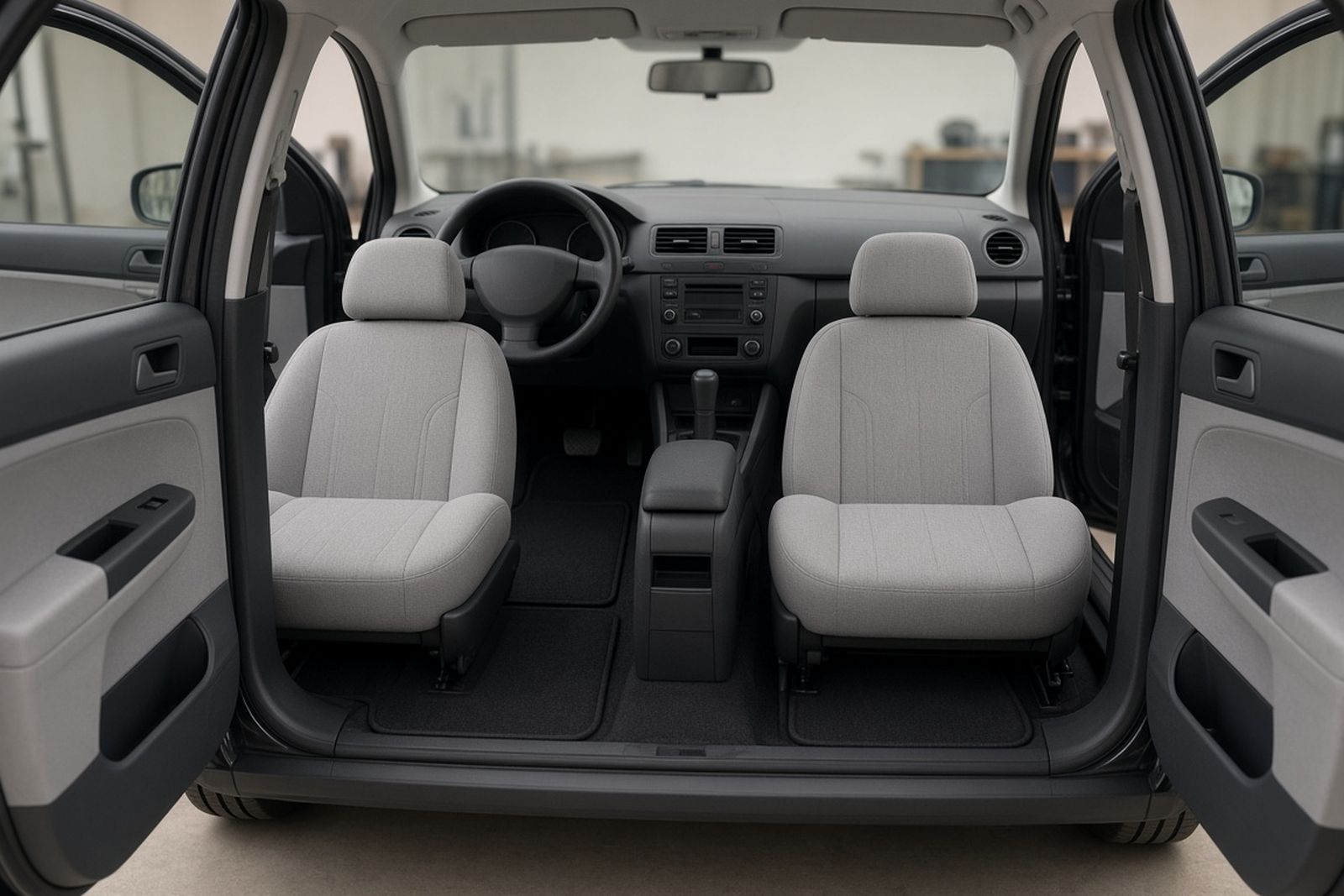
- Which agency released the vehicle from impound or an evidence hold. Also, whether you must show a release form or tow-yard papers before a crew can touch it.
- Who will haul away the soiled seat foam, carpet, and cabin filters. Also, whether that hauler is in good standing with your state's environmental agency.
- Whether the provider cleans vehicles where they sit or tows them to a shop, and whether that shop has a permit to hold soiled parts overnight.
- How the provider protects airbag parts, seat belt tighteners, and seat wiring during tear-down, and who will put back or replace those safety parts.
- Your state motor vehicle agency's rules on salvage, rebuilt, or other labeled titles if the insurer settles the vehicle as a total loss.
- Whether local rules say what you must tell a buyer when a cleaned car, truck, or motorhome is later sold on your own or traded in at a dealer.
National figures for context
These are national or research figures, not data for any one city.
- 1.19
The U.S. traffic fatality rate fell to 1.19 deaths per 100 million vehicle miles traveled in 2024, from 1.26 in 2023.
Read with care: Rate depends on FHWA mileage estimates that are revised periodically.
Source: NHTSA (2024)United States, 2024, VMT from FHWA
- 1,146
Roadway incidents involving motorized land vehicles killed 1,146 U.S. workers in 2024, the largest subcategory of transportation fatalities.
Read with care: Counts only work-related deaths, not all traffic fatalities.
Source: BLS (2024)United States, on-the-job roadway deaths, 2024
- 38.2%
Transportation incidents accounted for 1,937 worker deaths in 2024, 38.2% of all U.S. occupational fatalities.
Read with care: Includes aircraft, rail and water incidents, not just road vehicles.
Source: BLS (2024)United States, 2024, all workers
These figures are public research and agency data, not this network's own job records. Keep each number with its population, year and limits; none of them predicts cost, timing or outcome at a specific property.
Local questions about vehicular biohazard cleanup
The car is sitting in a police tow yard. Can a cleanup company work on it there?
Sometimes, but the yard sets the terms. Many impound and evidence lots do not let outside crews open vehicles on their property. So the car may need to be released and towed to the provider or to your driveway first. Call the agency's property unit. Ask what papers it needs to release the vehicle. Ask whether storage fees keep adding up while you arrange the next step. Share those answers with the provider before you schedule.
Does it matter which state the vehicle is titled in if the incident happened somewhere else?
It can. Cleanup and waste rules usually follow the place where the work is done. Title labels after a total loss follow the state that issued the title. If a car titled in one state is cleaned in another, you may deal with two sets of offices. Ask the insurer which state's title rules it will use. Ask the provider how it will pack and haul waste where the vehicle really sits.
Can a motorhome at a campground or RV park be cleaned where it is parked?
That depends on the park's rules and on local health and waste rules. Some parks limit business work on their grounds, or limit where soiled materials can be set down. A motorhome also has holding tanks, a fridge, and a small air system that may need care apart from the cabin. Talk with park management first. Then confirm with the provider how it will close off the work area and remove waste without using the park's dumpsters.
How does extreme summer heat in my region change a vehicle cleanup?
A closed cabin in strong sun can get far hotter than the outside air. That speeds up odor and drives fluids deeper into foam. It can also soften the glue on trim and the fabric ceiling. If you live somewhere with long hot seasons, ask a few things. Will the provider move the vehicle into shade or a covered bay? How will it manage moisture that forms during treatment? And has heat already ruined some soft materials so they cannot be saved?
Will a winter climate hide a mess I should worry about?
Cold can slow odor and make fluids seem dried up and contained. But the problem often comes back when it warms up or the heater moves cabin air around. Frozen carpet padding and foam are also harder to check by touch. Ask the provider to look under mats and seat bottoms instead of judging by smell alone. Ask them to run the heat during the final check, so hidden sources show up before you drive again.
Who do I call if a leased or rental vehicle is involved?
Contact the leasing company or rental agency before you approve any work. It owns the vehicle and usually has its own claims process and approved vendors. Your personal auto insurer may also need to be told. Ask the owner in writing whether you may hire a provider or whether it will arrange the cleanup itself. Keep copies of every message. Who pays for cleanup and lost use of the vehicle can turn into a dispute later.
Are business fleet vehicles handled differently from a family car in my area?
Often, yes. Businesses may have written exposure steps under OSHA's bloodborne germ standard. Business trucks may also need to meet DOT inspection rules before going back on the road. Local rules on where a company may park soiled vehicles vary. Ask the provider whether it can follow your fleet's written steps. Ask whether it can log vehicle numbers and final notes for your files. Also ask whether it will work with your fleet manager on when a vehicle is cleared for use.
More on vehicular biohazard cleanup
Vehicular Biohazard Cleanup services
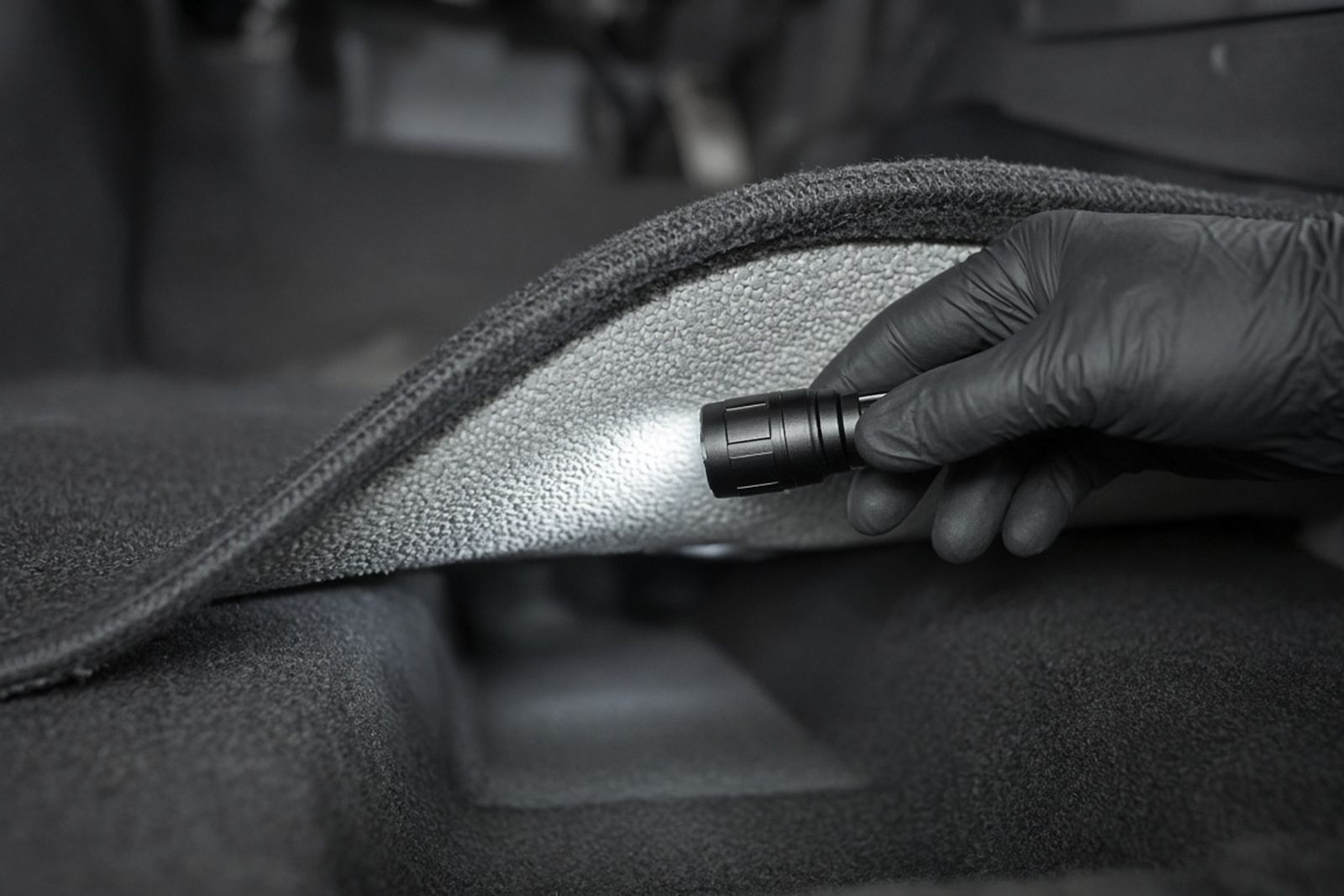
Learn what cleanup of a car, van, RV, or boat involves after blood, illness, or death. It covers checking foam and belts, the air system, and waste.
Costs explained
What drives the price, published cost ranges, and how to read a written quote line by line.
Insurance and payment
Which policies may respond, how to document a claim, and what to do if coverage is denied.
Planning tools
Estimate the job for your vehicle, check a provider, organize an auto claim, and plan the first day. Sort removed materials and see whether you should touch the cabin.
Community polls
See how other owners, rideshare drivers, and fleet managers handled soiled vehicles. Views range from first reactions to total-loss offers and what to tell buyers.
Knowledge quiz
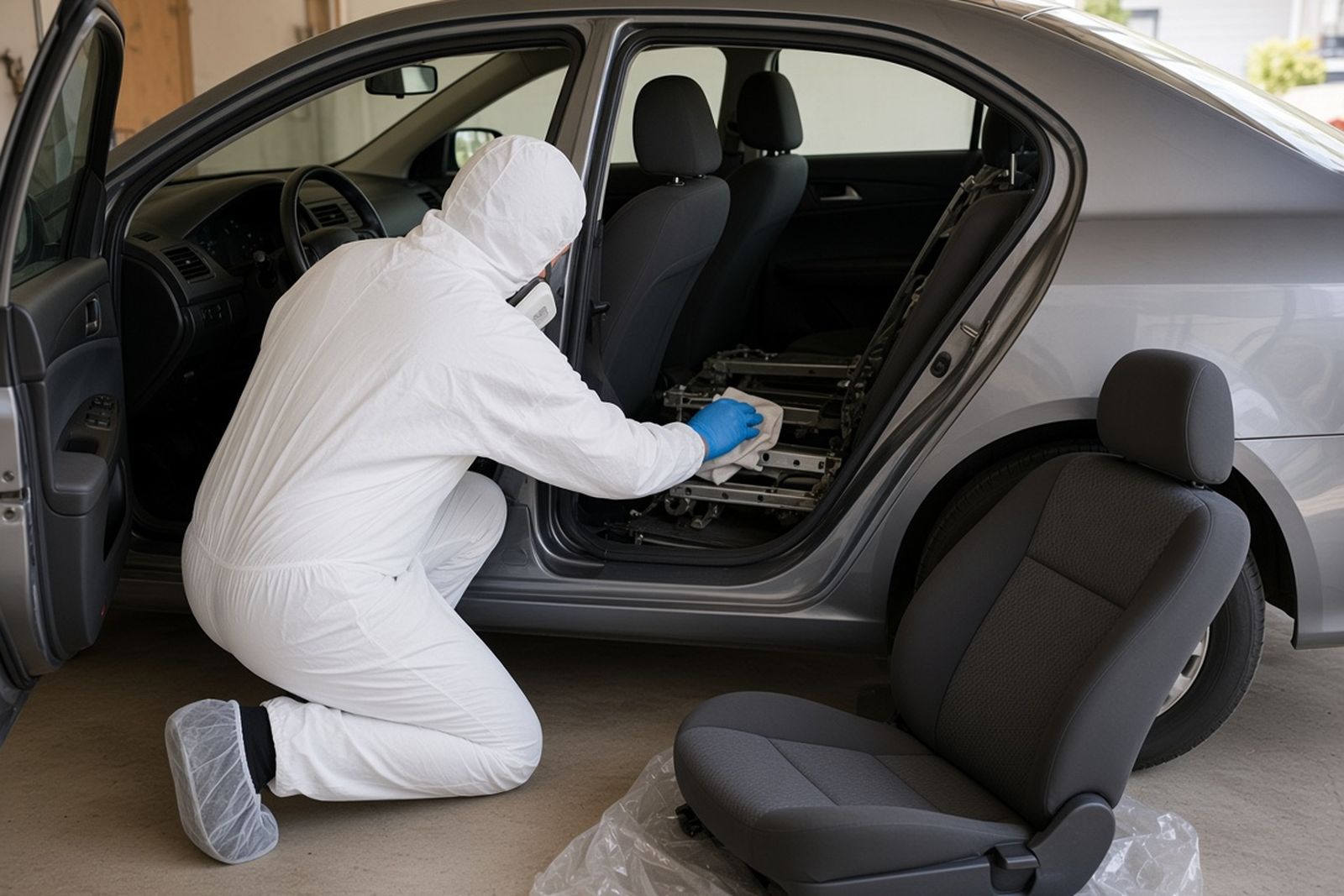
Test what you know about soaked foam, seat belts and airbags, the car's air paths, regulated waste, and when an insurer may total the vehicle.
Articles and resources
Plain reads on rideshare cases, fleet steps, RV and boat cabins, and how heat speeds decay. Learn how to talk with an adjuster about your car or truck.